

Workforce development is becoming increasingly important to facilities management as specialist and remote environments demand stronger leadership, resilience and continuity of service.
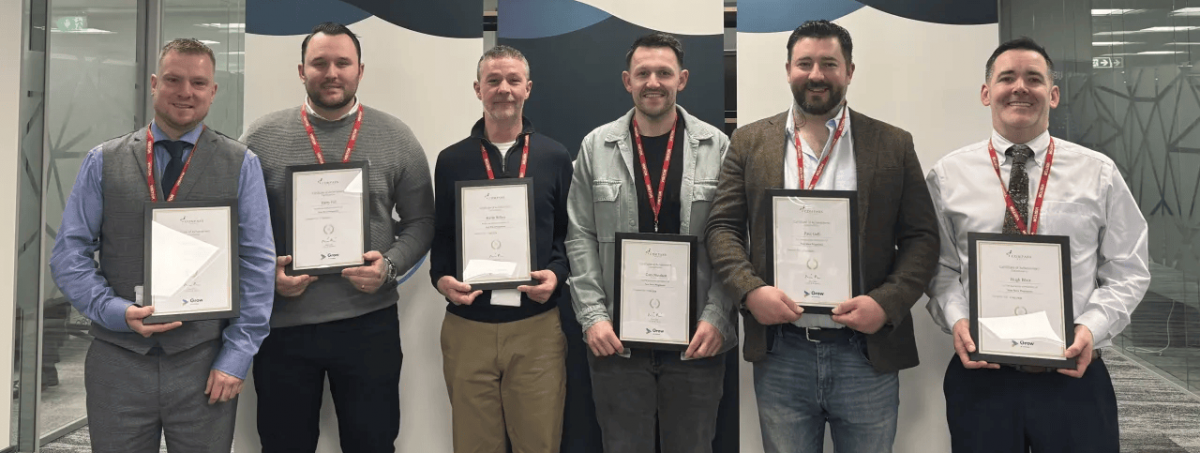
ESS Energy has celebrated the graduation of the first cohort from its 12-month Next Wave programme, which has been designed to develop future chef managers for the offshore sector. Six candidates completed a combination of on-the-job training, workshops, e-learning, practical assignments and mentoring before presenting final projects at a graduation event in Aberdeen. The programme reflects the growing importance of structured career development in specialist facilities management environments, where service teams must maintain consistent standards while operating in challenging conditions.
The programme forms part of a wider workforce challenge facing the energy sector, with ESS identifying an ageing workforce and the need to develop a stronger pipeline of future managers. According to ESS Energy, the Next Wave initiative combines practical experience with leadership development to build the knowledge, capabilities and behaviours required for management roles. This approach is particularly relevant to FM, where operational performance depends heavily on the availability of skilled people who can manage teams, resources and services effectively.
For facilities management professionals, offshore environments present additional operational demands. ESS managers provide food service and facilities support to workers who can spend extended periods living offshore, meaning service delivery must remain reliable despite remote locations, restricted resources and changing operational conditions. Aberdeen & Grampian Chamber of Commerce has highlighted the importance of skills development and workforce investment to the region's wider business and energy economy, making structured progression programmes increasingly relevant as organisations compete for specialist talent.
Leadership development also has a direct connection with service continuity. Managers operating offshore need to combine technical knowledge with communication, adaptability and the ability to respond calmly under pressure. Developing these capabilities internally can help FM providers retain organisational knowledge, strengthen succession planning and reduce dependence on external recruitment for specialist management positions.
The programme also demonstrates how training can support wider employee engagement and retention. Participants received individual mentoring alongside formal training and practical experience, creating a structured pathway from technical expertise towards management responsibility. For FM employers, providing visible progression opportunities can help retain experienced employees while giving emerging managers the skills required to take on greater operational responsibility.
This is particularly significant across sectors where facilities management is delivered in complex or safety-sensitive environments. Offshore energy, healthcare, industrial facilities and large-scale infrastructure all require managers capable of coordinating people and services while responding to operational pressures. Investing in leadership capability therefore extends beyond individual career development and can contribute to resilience across the wider FM operation.
The introduction of a second Next Wave cohort also indicates a longer-term approach to workforce planning. Rather than treating skills development as a short-term response to recruitment pressures, structured programmes can create a continuous pipeline of employees prepared to progress into supervisory and management roles. For FM providers, this can support consistency, knowledge transfer and the ability to maintain service standards as experienced personnel leave the workforce.
For the sector, the lesson is clear: operational resilience depends on people as much as systems and technology. In specialist facilities management environments, developing future leaders through structured training, mentoring and practical experience can strengthen service continuity while helping organisations respond to long-term workforce challenges.
Source: AGCC / ESS Energy / Aberdeen Business News









.png)