

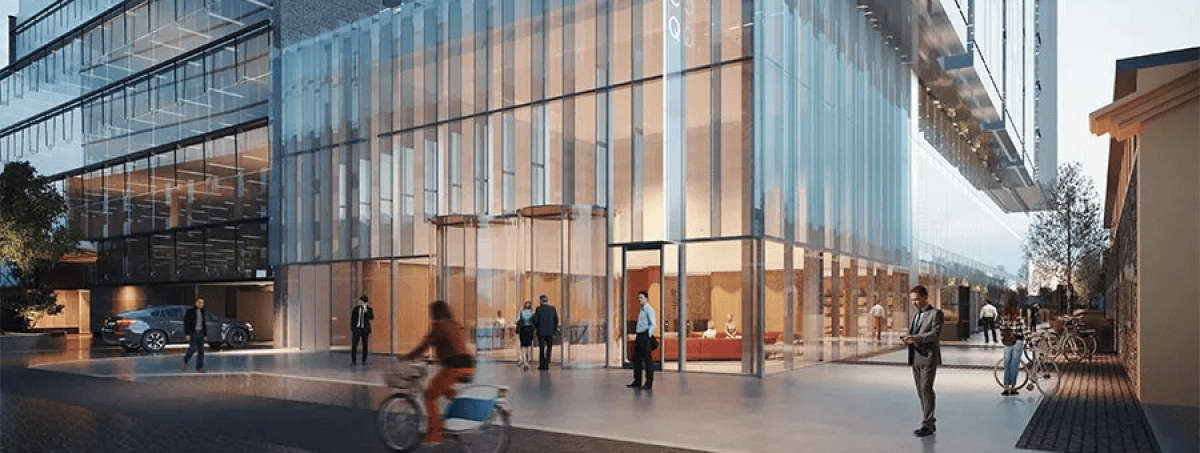
State Street's new Dublin headquarters demonstrates how major corporate workplaces are increasingly being shaped by sustainability, employee wellbeing and long-term facilities management considerations.
State Street has signed a long-term lease for a new Irish headquarters at 2 Grand Canal Quay in Dublin, with the financial services and investment management firm set to occupy 80,000 sq ft across seven floors of the 15-storey building from the third quarter of 2027. The move represents a significant investment in the company's Irish operations as it approaches 30 years in the country, where it now employs more than 2,000 people.
The building itself reflects a broader shift in corporate workplace strategy, with organisations increasingly assessing offices not only in terms of location and capacity but also their long-term operational performance. According to the 2GCQ Dublin sustainability profile, the development incorporates a focus on energy efficiency, operational sustainability and employee wellbeing, including on-site renewable energy generated through solar and heat-pump technologies. The building is also targeting net-zero operational carbon by 2030.
For facilities management professionals, these features demonstrate the growing importance of managing sustainability alongside employee experience. The 2GCQ development has been designed around natural light, fresh air, smart building systems and occupant comfort, with the building's own sustainability information highlighting the role of technology in supporting both wellbeing and operational performance. 2GCQ Dublin Effective facilities management will be central to translating these design intentions into day-to-day performance through energy monitoring, planned maintenance, building systems management, workplace services and ongoing evaluation of occupant requirements.
The scale of State Street's occupation also demonstrates the operational complexity associated with large corporate estates. The company will occupy floors four to 10, including a terrace on the top floor, requiring coordinated management of building services, cleaning, security, maintenance, workplace technology and shared facilities. The building's planning documentation from the National Building Control and Market Surveillance Office identifies staff facilities, changing rooms, showers, plant equipment, office areas and other supporting infrastructure within the development.
The headquarters also illustrates how access and location can contribute to workplace performance. Situated in Dublin's South Docklands, 2 Grand Canal Quay is connected to the city's public transport network, while its facilities include end-of-trip amenities designed to support employees. The building's environmental credentials and transport accessibility, reinforcing the importance of considering the wider workplace environment when managing corporate estates.
As organisations increasingly expect measurable environmental and workplace outcomes, facilities teams are being asked to move beyond reactive service delivery towards data-led management of energy, assets, space and occupant experience. The building's stated use of smart systems and renewable energy provides an example of how technology can support this transition, provided facilities teams have the operational processes and skills required to monitor and maintain those systems effectively.
For the sector, the lesson is clear: a modern headquarters is not defined solely by its design or location. Long-term value depends on how effectively the building is operated, maintained and adapted to changing organisational and occupant requirements. As major employers continue investing in sustainable workplaces, facilities management will play a central role in turning environmental ambitions, operational efficiency and employee wellbeing into measurable day-to-day performance.
Source: Business Plus / 2GCQ Dublin / FX News Group/ National Building Control and Market Surveillance Office






.png)