
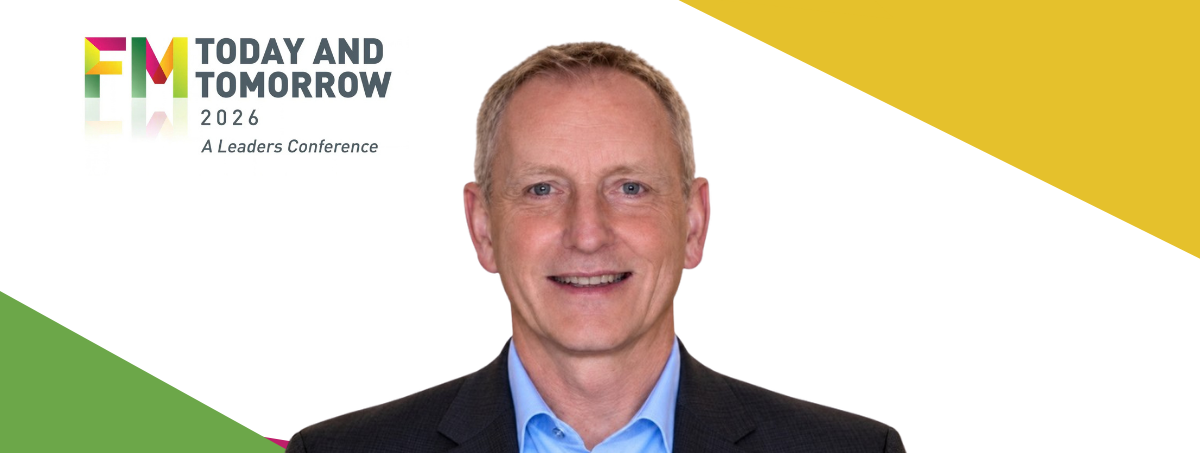
There is a version of facilities management that still operates as a reactive, cost-focused discipline, and there is a version that sits at the heart of how organisations manage technology, sustainability, workplace experience, and operational resilience together. Alex Magee, Programme Chair of Facilities and Building Services Management at ATU Sligo, believes 2026 is the year that distance between those two versions becomes decisive. Ahead of the FM Today and Tomorrow Conference on Wednesday 4th November at the Crowne Plaza, Santry, he shared what is driving that shift and what the sector stands to gain from the right conversations.
For Magee, the interconnected nature of FM's current priorities is what makes this moment different. "Technology, sustainability, workplace experience and resilience can no longer be treated as separate priorities. They are increasingly interconnected, and FM sits right at the centre of that." The organisations moving forward, he argues, are those using data intelligently, investing in people and skills, and taking a longer-term view. "FM is becoming far more strategic, and organisations that continue to see it mainly as a reactive or operational function will find it harder to keep pace."
The value of the conference format, in his view, lies in the particular mix of people it brings into the same room. "Providers, occupiers, workplace leaders, sustainability teams and technology specialists all look at the same environment through a different lens. When those perspectives come together, the conversation becomes much more valuable." What becomes possible in that setting goes beyond the exchange of individual insights. "You move beyond individual issues and start looking at how buildings perform, how people experience them, where investment is needed and how better decisions can be made across the whole lifecycle of an asset."
His picture of the FM leader of 2027 is one that balances technical confidence with human judgement. "The FM leader of 2027 will need to be commercially aware, technically confident and very people focused. Technology will continue to grow in importance, but good judgement, communication and leadership will remain essential." For anyone still deciding whether to attend in November, his case is direct: "The real value is in stepping outside your own day-to-day environment, hearing different perspectives, challenging your thinking and learning how others are responding to many of the same pressures and opportunities."
Looking further ahead to what 2027 will have confirmed, he expects a fundamental shift in how digital tools move from aspiration to routine. "One of the biggest changes will be the shift from talking about data and digital technology to using them routinely in FM decision-making. That will increasingly influence maintenance, energy, compliance, asset performance and investment planning." The real challenge, he cautions, will be less about adoption and more about capability. "Making sure FM professionals have the skills and confidence to interpret the information properly, question it where necessary and turn it into better operational and strategic decisions."
On what draws him to events like this, his answer reflects both the practitioner and the educator in him. "People come from different sectors, roles and backgrounds, so you hear what has worked, what has not and, importantly, why. Those conversations are valuable because they challenge assumptions and often lead to practical ideas you can take back into your own organisation. For me personally, they also help connect what is happening in industry with the way we educate and prepare the next generation of FM professionals."
Full details and registration are available at fmawards.ie/conference, and subscribe to the newsletter to stay informed on speaker announcements and agenda updates.



.png)