
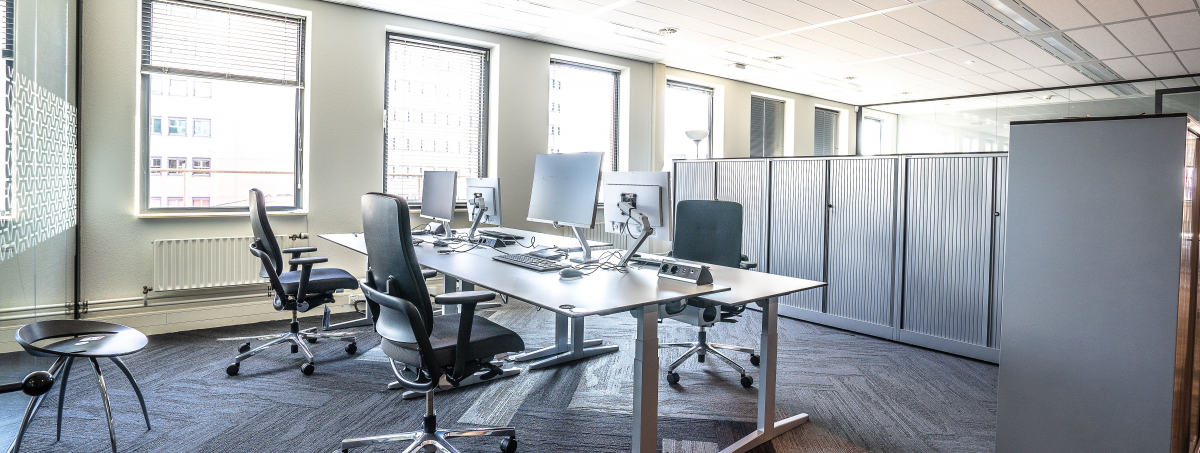
The conversation around workplace wellbeing has expanded significantly over the past decade, covering mental health support, flexible working, ergonomic design, and inclusive culture. One element that has consistently been undervalued in that conversation is the physical environment in which people spend their working day, and specifically the standard of cleanliness and hygiene maintenance that defines how that environment feels to work in. Crystal Facilities Management's September 2026 statement urging UK businesses to treat professional office cleaning as a strategic investment rather than a discretionary expense puts a direct and well-evidenced argument on the table: a workplace's cleaning standard has a measurable bearing on staff productivity, absence levels, and the impression a business makes on clients and prospective employees. For facilities management ireland and UK professionals responsible for soft FM service delivery, that argument deserves to be taken seriously at board level, not managed quietly as an overhead line in a facilities budget.
The occupational health evidence behind Crystal's position is well-established. The Health and Safety Authority Ireland's guidance on biological agents in the workplace identifies shared surfaces, kitchens, and washrooms as significant transmission vectors for common respiratory and gastrointestinal illnesses, with the associated absence costs compounding across winter months when viral circulation peaks. Research published by the Chartered Institute of Building Services Engineers confirms that indoor air quality, directly affected by cleaning frequency, product selection, and ventilation maintenance, has a quantifiable impact on cognitive performance, with poorly maintained indoor environments associated with measurable reductions in concentration and decision-making capacity. These are not soft benefits. They are operational performance factors that facilities management professionals can measure, report, and use to build a compelling business case for professional cleaning investment at any level of an organisation.
The sustainability dimension of professional cleaning is increasingly relevant for FM organisations operating under ESG reporting obligations and Circular 17/2025 procurement requirements. Crystal Facilities Management highlights its commitment to environmentally responsible cleaning products and methods that improve indoor air quality while reducing waste, a combination that aligns directly with the green procurement criteria now mandatory for public sector contracting authorities and increasingly expected by institutional private sector clients. ISO-accredited cleaning processes, supervisor-led quality audits, and TUPE-compliant mobilisation for switching providers are the governance standards that distinguish professional FM cleaning partners from commodity cleaning suppliers, and they are precisely the standards that procurement professionals should be specifying in cleaning contracts rather than defaulting to lowest price as the primary award criterion.
Three actions allow facilities management Ireland and UK organisations to elevate office cleaning from a facilities overhead to a workplace wellbeing and operational performance investment. First, FM directors should commission a workplace hygiene and indoor air quality assessment across their managed estates, using CIBSE indoor environment guidance as the benchmark to establish whether current cleaning frequency, product selection, and ventilation maintenance standards are delivering the indoor environment quality that occupant health and productivity require. Second, organisations reviewing cleaning contracts should specify ISO accreditation, trained and DBS-checked operatives, and documented quality audit processes as minimum qualification criteria rather than treating these standards as premium options, ensuring that the wellbeing case for professional cleaning is supported by the governance framework that makes performance claims verifiable and accountable. Third, FM and HR teams should collaborate to include cleaning and workplace hygiene standards in employee wellbeing surveys and return-to-office communications, making the connection between a well-maintained physical environment and employee health and comfort visible to the workforce and to senior leadership teams making decisions about office investment and hybrid working policy.
Professional office cleaning is not a peripheral facilities service. It is a direct contributor to the indoor environment quality that determines how people feel at work, how often they are absent, and how confidently they recommend their workplace to others. Facilities management ireland professionals who make that case effectively are not just defending a service line. They are strengthening the strategic role of FM in every organisation they serve.





.png)