

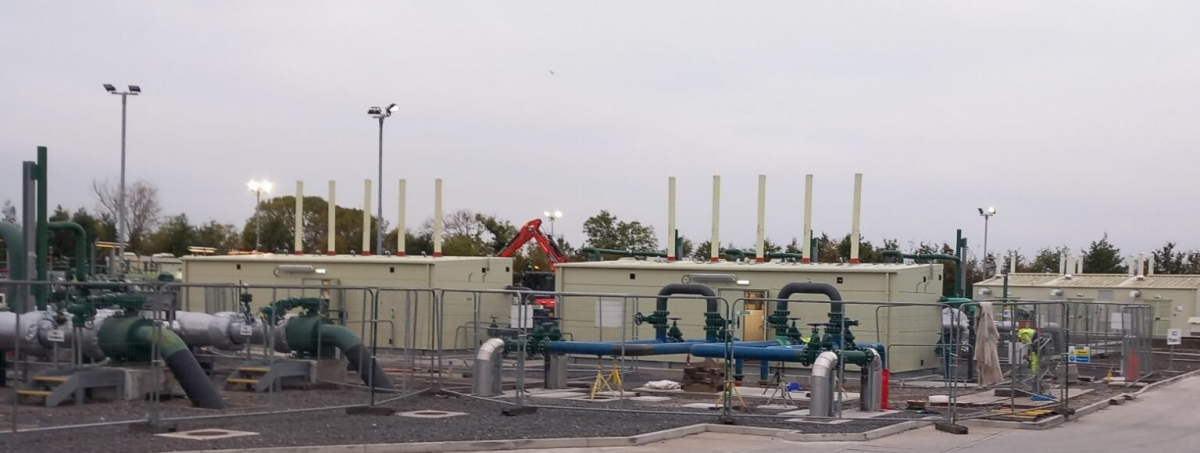
Armstrong Industrial’s expansion of boiler capacity at an Irish gas interconnector shows how facilities and engineering management become increasingly important as critical infrastructure assets are expanded and integrated.
Armstrong Industrial has supplied two additional 3MW boiler houses at an Irish gas interconnector, increasing installed heating capacity from 9.5MW to 15.5MW. The upgrade supports a stated increase in interconnector capacity from six million to 6.9 million standard cubic metres of gas per day. Impeller reported the project.
Armstrong Industrial is a division of Armstrong Fluid Technology specialising in industrial heating and process systems, including packaged boiler and plant solutions.
The project extends an existing Armstrong installation supplied in 2022. The two new boiler houses had to be integrated with the existing units and the site's master control panel, creating a larger interconnected heating system rather than a separate installation.
The facilities management significance is the relationship between additional capacity and asset integration. The boilers are not simply standalone heating equipment. They form part of the infrastructure required to pre-heat gas before pressure reduction, meaning their availability, controls and performance contribute to the operation of a wider critical asset.
For FM and engineering teams, this creates a lifecycle management requirement. New plant needs to be incorporated into maintenance regimes, control systems, inspection programmes and asset records while existing equipment continues to operate. The interface between new and legacy assets can become as important as the performance of the individual equipment itself.
The project also demonstrates the value of planned asset capacity. Armstrong's installation increases available heating capacity while allowing boiler output to be modulated according to the required load. The system is designed to maintain a gas outlet temperature above 2°C after pressure reduction, providing additional capacity for future increases in gas flow.
That creates a direct connection between facilities management and operational resilience. Where a plant supports a critical infrastructure process, maintenance and asset availability can influence whether the wider facility can operate at its intended capacity. FM therefore extends beyond buildings and conventional building services into the management of specialist process infrastructure.
The delivery model is also relevant. Armstrong submitted its tender return within 10 days of receiving the request in October 2024, received the purchase order in February 2025 and began manufacturing in July. The completed boiler houses were inspected at Armstrong's Droitwich facility in September before being transported to Ireland and commissioned the following month.
Off-site manufacturing can reduce some of the complexity associated with installing large plant in operational environments. The boiler-house enclosures were approximately 10 metres long, 3.7 metres wide and 3.2 metres high before the flue terminals were added, making factory assembly and inspection an important part of the delivery process.
The project also brings environmental and maintenance considerations into the FM picture. The installation uses low-NOx condensing boilers, while condensate is neutralised before discharge. These requirements add operational tasks around monitoring, maintenance and compliance that need to be incorporated into the lifecycle management of the equipment.
The wider lesson is that critical infrastructure FM increasingly involves coordinating process plant, controls, energy systems and specialist engineering assets rather than managing the building in isolation. As infrastructure operators increase capacity, facilities teams need visibility of how new equipment affects existing assets, maintenance requirements and operational interfaces.
For the sector, the lesson is direct: facilities management is increasingly part of the capacity strategy for critical infrastructure. When a new plant is integrated into existing systems, effective asset management, maintenance, controls and lifecycle planning become essential to ensuring that additional capacity translates into reliable operational performance.
Source: Impeller / Engineer Live / Industrial News / Armstrong Fluid Technology










.png)