

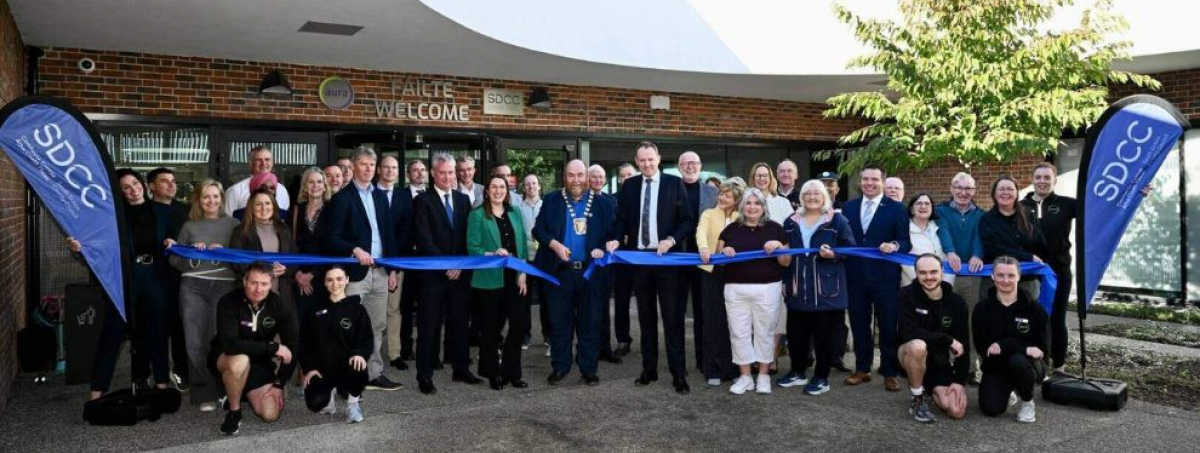
Ireland’s new Lucan Leisure Campus demonstrates how investment in modern, accessible infrastructure can create lasting community value while placing sustainable facilities management at the heart of public service delivery. Officially opened on 20 October 2026, the South Dublin development combines new aquatic facilities with an upgraded leisure centre, expanding opportunities for local residents to swim, exercise and participate in community activities.
Supported by €3.8 million in Government funding, the campus includes two swimming pools, a gym, exercise studios, a sports hall, sauna, steam room, changing facilities and a crèche. According to Sport for Business, the project adds to Ireland’s efforts to improve access to swimming and community sport.
South Dublin County Council, the local authority responsible for services and community infrastructure across the county, has developed the campus alongside Griffeen Valley Park. The council says the pool building meets Nearly Zero Energy Building standards and includes accessible changing facilities, including a Changing Places facility. These features place energy performance and inclusive access among the development’s key considerations.
For facilities management teams, the project highlights the importance of planning for operational performance from the outset. Swimming pools require coordinated management of heating, ventilation, water treatment, humidity and building controls. Energy-efficient design can help reduce demand, while proactive maintenance and performance monitoring are essential to keeping complex facilities reliable and fit for purpose over time.
The wider campus also presents an opportunity to coordinate cleaning, maintenance, staffing and user services across multiple leisure spaces. For local authorities and operators, integrated facilities management can help protect building assets, maintain service standards and provide a welcoming environment for users of different ages and abilities. The long-term value will depend on how effectively these facilities are operated and maintained after opening.
The development comes as Swim Ireland and Ireland Active call for a ten-year, €1 billion investment programme for swimming and community leisure infrastructure. Their proposal highlights the need to expand access to public pools, although the funding programme remains an industry recommendation rather than a confirmed Government commitment.
For procurement teams, Lucan reinforces the importance of considering whole-life value alongside initial construction costs. Energy efficiency, maintenance requirements, accessibility and service quality all influence the long-term performance of public assets.
For the sector, the lesson is direct: successful leisure infrastructure depends on more than delivering a building. By combining inclusive design, energy-efficient systems and proactive facilities management, local authorities can protect public investment and create community facilities that deliver value for years to come.
Source: Sport for Business / South Dublin County Council / Swim Ireland









.png)