




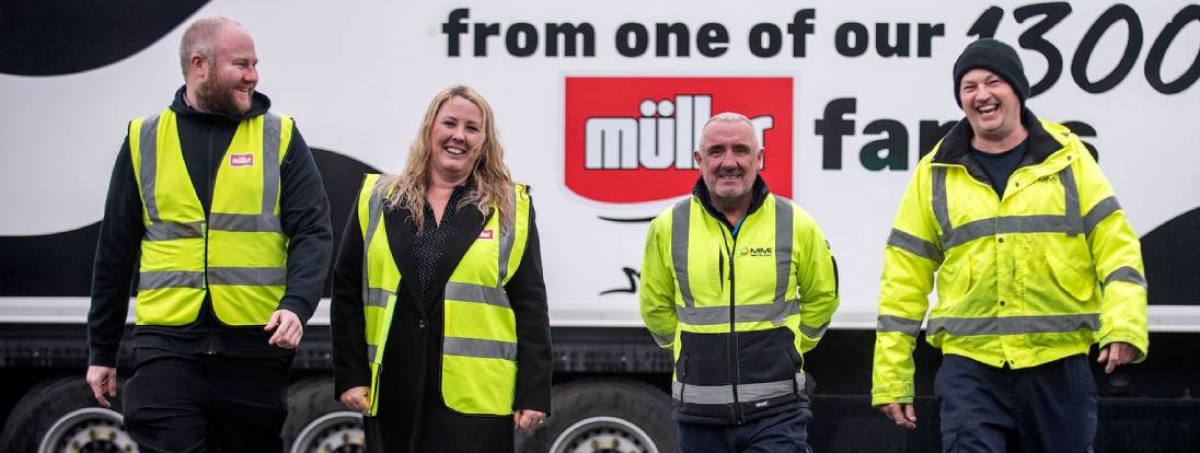
Müller UK & Ireland’s continued growth is driving investment in the manufacturing and logistics infrastructure supporting its dairy operations across Britain and Ireland.
As reported by Insider Media, the business recorded revenue of £2.66bn for the year ended December 2025, up from £2.45bn in 2024. Profit before division among members increased from £34.3m to £70.7m.
Müller is one of the UK's largest dairy businesses, operating a network of processing and distribution facilities and supplying milk, yoghurt and other dairy products to retailers and foodservice customers.
A major part of its investment programme is the development of its Skelmersdale site in West Lancashire. Müller has committed £45m to expand the facility's capacity and capabilities, with plans to establish it as one of the UK's largest and most flexible milk-balancing sites.
The next phase includes an in-house logistics hub capable of accommodating up to 65 milk collection vehicles. The development will support the daily movement of raw milk from supplying farms while creating roles across driving, vehicle maintenance and logistics support.
For facilities management teams, the project demonstrates how manufacturing growth depends on more than production equipment alone. Larger and increasingly integrated sites require coordinated management of vehicle movements, utilities, maintenance, equipment and supporting infrastructure.
The Skelmersdale investment is also intended to strengthen Müller’s ability to balance milk supply across its wider network. Greater flexibility in processing, storage and logistics can help manufacturers respond to changes in supply while maintaining production continuity and customer service.
That creates a wider asset-management challenge. New processing and logistics infrastructure must be integrated into existing operational environments without disrupting reliability, safety or day-to-day production.
Müller’s wider programme, including the integration of Yew Tree Dairy, further reflects the connection between physical infrastructure and supply-chain resilience. As manufacturing networks expand, the performance of facilities, engineering and logistics assets can directly affect throughput and operational continuity.
For the sector, the lesson is clear: manufacturing growth increasingly requires facilities, production and logistics infrastructure to be managed as part of one operational system. Müller’s investment highlights how coordinated asset planning can support resilience while creating the capacity for future growth.
Source: Insider Media / Müller UK & Ireland
















.png)