

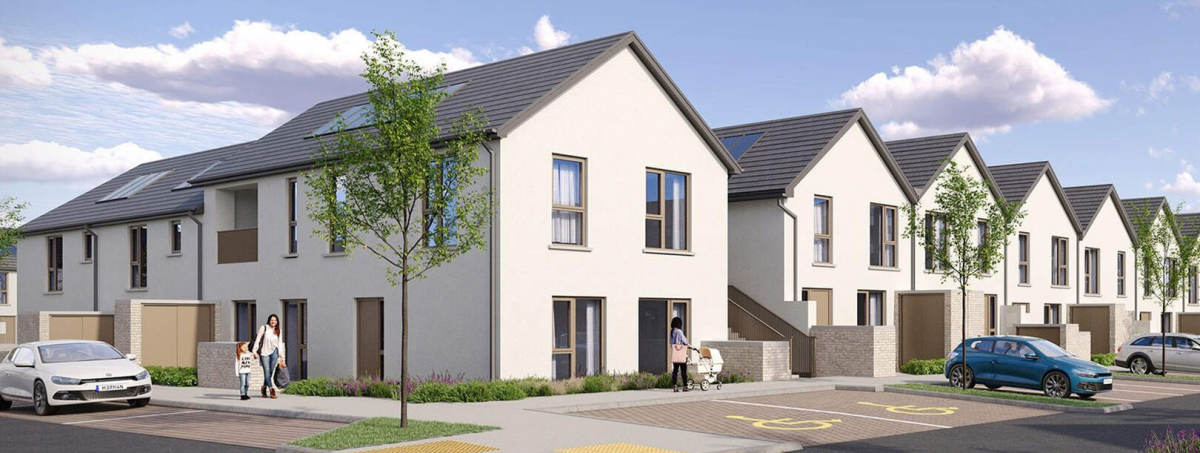
Glenveagh’s proposed second phase at Baile na Móna in Swords is set to deliver more than additional housing. The 360-home development will also introduce public spaces, recreational facilities and supporting infrastructure that will need to be managed and maintained as the neighbourhood grows, placing long-term facilities planning firmly within the development process.
The project involves a proposed €10.5m acquisition of a 35-acre site at Mooretown from Fingal County Council. As reported by the Irish Independent on 8 November 2026, Glenveagh was selected through a council procurement process to deliver 249 affordable and 111 social homes. The proposed disposal was due to be considered by councillors at the 9 November meeting, so the transaction remains subject to approval.
Fingal County Council’s planning information describes a scheme that includes houses, duplexes and apartments, as well as a crèche, public open spaces, a playground and a multi-use games area. The plans also include roads, pedestrian and cycle connections, parking, drainage and utility infrastructure. These shared assets will form an important part of the neighbourhood’s everyday operation once the homes are occupied.
For facilities management providers, developments of this scale highlight the importance of planning operational requirements early. Public spaces and play facilities need regular inspections, cleaning, landscaping and maintenance. Roads, lighting, drainage and shared infrastructure require ongoing monitoring and planned servicing to help keep the neighbourhood accessible and functional. The crèche will also introduce a community facility with its own building-management and maintenance requirements, although its eventual operator and service arrangements have not been confirmed.
The development builds on the first phase of Baile na Móna, where 274 homes are under construction. Across both phases, the project is expected to provide 634 social and affordable homes. As the wider community takes shape, coordination between developers, local authorities, service providers and any future facilities operators will be important in establishing clear responsibilities for the upkeep of shared assets.
Glenveagh’s Baile na Móna community information provides further context on the development and its community focus. The project also illustrates why facilities considerations should be integrated into residential planning from the outset. Decisions on materials, access, lighting, landscaping and infrastructure can influence the resources and maintenance requirements associated with a development over its lifetime.
For FM suppliers, the project represents a potential future opportunity to support the operation of community spaces and shared infrastructure. However, no specific facilities management contracts have been announced, and responsibility for individual assets will depend on the final ownership and management arrangements.
For the sector, the lesson is direct: successful housing delivery extends beyond construction. Planning for the operation and maintenance of shared spaces, community facilities and essential infrastructure can help create neighbourhoods that remain safe, accessible and well maintained as they grow.









.png)